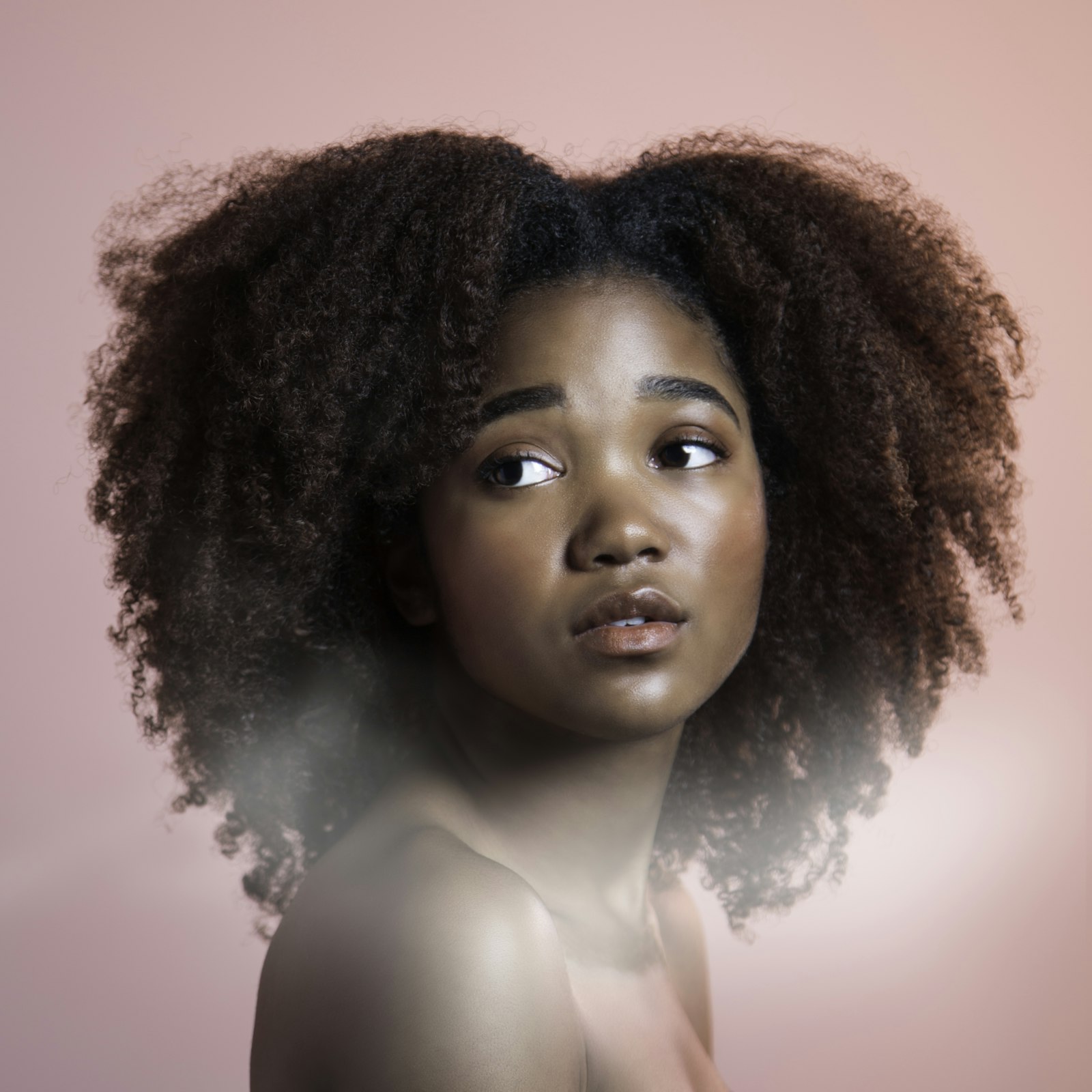
Real hair is thousands of separate strands that catch light, break apart at the edges, and drift with a little chaos. The AI default paints a smooth, molded shell, and that shell is the tell.
Real hair is thousands of separate strands that catch light, break apart at the edges, and drift with a little chaos. The AI default paints a smooth, molded shell, and that shell is the tell.
Helmet hair is quietly outing your portraits. Here is how to prompt real strands, flow, and flyaways so hair reads as genuinely alive on the model you already use.
Hey friends. We have spent weeks chasing realism from the skin out: pores, expression, wardrobe, light. So here is a portrait where every one of those boxes is checked, and it still looks a little off, and you cannot quite say why. Look at the top of the head. The hair is a single smooth, molded, suspiciously perfect shape, like a glossy wig pressed on from a mold. That plastic helmet is one of the most common AI tells left, and almost nobody prompts for it on purpose.
Real hair is not a shape, it is thousands of individual strands doing slightly different things. It catches light in a bright band, breaks into loose pieces at the edges, throws a few stray flyaways into the air, and drifts with a little chaos even when it is styled. Today we teach the model to render that instead of the shell. We will cover strand detail, flow and movement, the flyaways that sell it, hairstyle vocabulary, and how light turns hair from flat paint into something with depth.
Ask a model for "long brown hair" and it gives you the safe average of every head of hair it ever learned from: a smooth, evenly-colored, tidy mass with a soft sheen. It is not wrong exactly, it is just generic, and generic reads as fake because real hair is never that uniform. Real hair has strands of slightly different tones, darker roots, lighter tips, some pieces catching light and others in shadow, and a soft messy edge where individual hairs escape the main shape.
The fix is the same one we come back to again and again: the model will render detail, flow, and imperfection, but only if the prompt asks. Leave hair unspecified and you get the molded default. Name what real hair does and the model happily builds it strand by strand.
The first upgrade is telling the model that hair is made of separate strands, not a solid block. Concrete texture words do the heavy lifting here:
These are exactly the kind of surface-level cues that make any material read as real, and hair behaves a lot like the fabrics and other surfaces in our texture and materials guide. Think of hair as a material with its own grain, and prompt it that way.
Static, perfectly settled hair looks staged. A hint of motion instantly makes a portrait feel like a captured moment rather than a mannequin display. You do not need a windstorm, just a little life:
Movement in the hair pairs beautifully with movement in the body, so if your figure is posed with any energy, let the hair answer it. Our posing and body language guide is all about that dynamic, unstaged feel, and hair that moves with the pose is what completes the illusion.
Vague hair prompts produce vague hair. If you want a specific look, describe it like a stylist would, because specificity is what stops the model from defaulting to the same loose middle-parted waves it gives everyone. Reach for real style language:
The more the style is a real, nameable thing, the more coherent and believable it renders. This is the same principle that makes wardrobe work, and it lines up with the styling mindset in our wardrobe and styling guide: describe a specific, intentional look and the model commits to it.
Here is the secret weapon. Hair looks flat and painted-on until light gives it depth, and the single most powerful trick is backlight. A light behind the subject catches the fine edges of the hair and lights them up into a soft glowing rim, separating the head from the background and revealing thousands of individual strands at once. Prompt it directly with rim light on the hair, backlit hair with a soft glowing edge, or sunlight catching loose strands.
Top light and side light give hair a bright band of shine that follows its shape and shows off the flow. If you want to really understand how these choices change the mood and the read of a portrait, our lighting and mood guide covers rim light and backlight in depth, and hair is one of the biggest payoffs of getting that light right.
A short, aimed negative prompt clears out the worst of the default helmet. Keep it lean and specific rather than a giant copied wall:
Aim the negatives at the specific failure you keep seeing, not at everything at once. If negative prompting still feels like guesswork, our friendly walkthrough on using negative prompts as a precise eraser explains why a few targeted words beat a hundred hopeful ones.
| Vague prompt | Same idea, real hair |
|---|---|
| woman with long brown hair | woman with long brown hair, individual strands visible, soft flyaways, darker roots, tousled beach waves, backlit with a soft glowing rim (negative: plastic hair, helmet hair) |
| portrait, blonde hair | portrait, blonde hair, sleek high ponytail, fine strand detail, a few loose tendrils at the temples, side light catching the shine (negative: flat hair, wig-like) |
| close up, curly hair | close up, tight coily curls with defined ringlets, natural volume, subtle tone variation, soft frizz halo, warm rim light on the edges |
Same subject, same model, but the right column tells the hair to be strands instead of a shape, to move, to be a real named style, and to catch real light. That is the whole gap between a wig and a head of hair.
The one habit that fixes most plastic hair: never prompt hair with just a color and a length. Always add one texture cue and one light cue, even something as small as "fine strands, soft flyaways, backlit edge." Those few words turn a molded helmet into hair that breathes.
Plastic hair is not your model running out of talent, it is the prompt forgetting that hair is thousands of separate, imperfect, light-catching strands. Ask for strand detail, give it a little movement, name a real style, light it with a rim or a backlight, and forbid the molded helmet. Do that and the top of the head stops being the weak spot of your portrait and becomes one of the best parts of it.
Great hair also depends on the face beneath it feeling alive, so pair this with our facial expression and emotion guide, and you can see plenty of light-catching, flowing hair at work throughout our character galleries. Now go let that hair down.
Happy generating, and send me the hair shot that finally stopped looking like a wig!