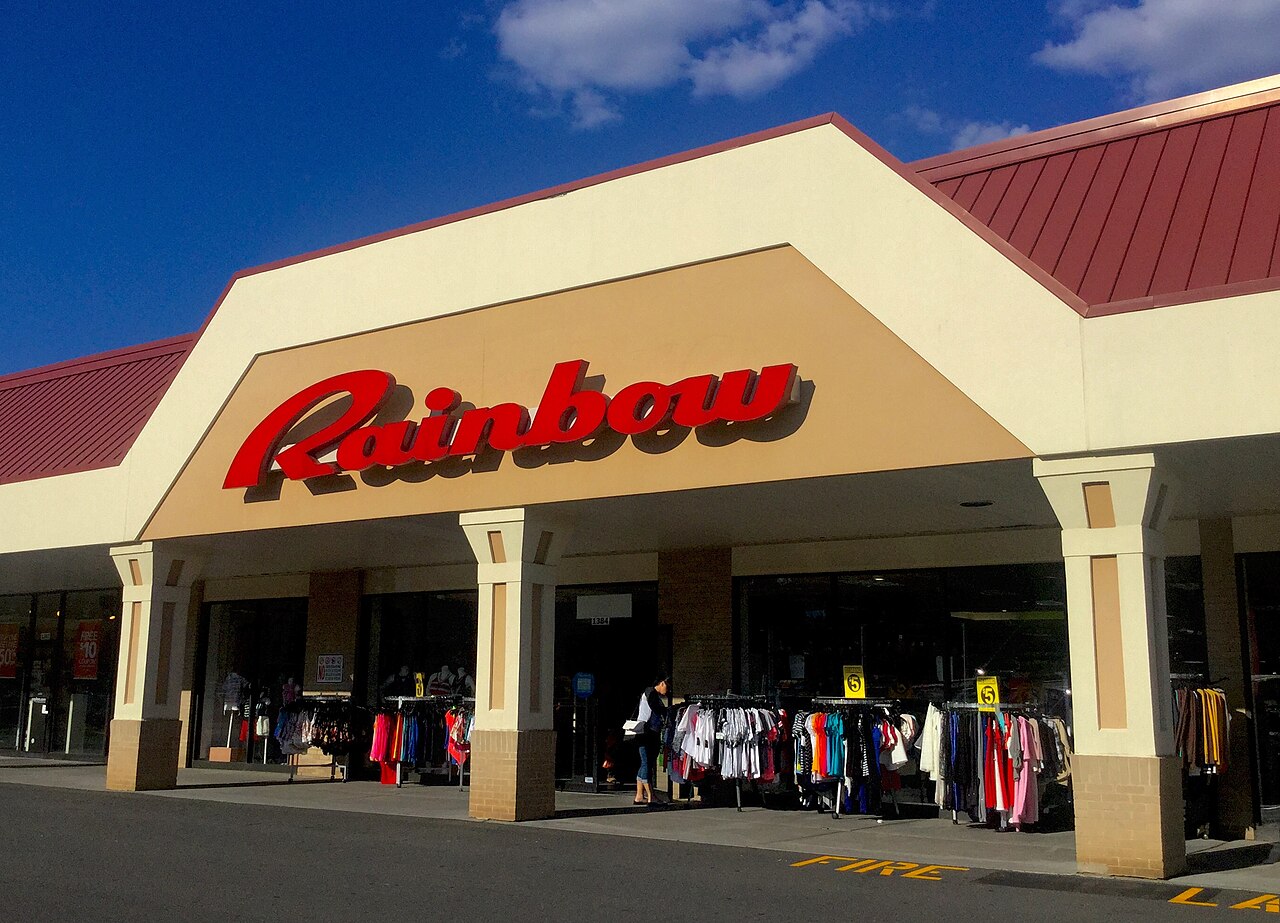
A Rainbow clothing store in Wethersfield, Connecticut, 2016. Photo: Mike Mozart, Creative Commons Attribution 2.0, via Wikimedia Commons.
A Rainbow clothing store in Wethersfield, Connecticut, 2016. Photo: Mike Mozart, Creative Commons Attribution 2.0, via Wikimedia Commons.
The contract never says AI. It says altered, composite and distorted, without restriction. That is the whole fight.
Everything on this site is made with AI. Which is exactly why this case matters: it’s the clearest example yet of what happens when AI images get made from a real person who never agreed to them, and the paperwork says that’s fine.
In September 2024, a New York model named Francheska Pujols shot a freelance catalog job for Rainbow USA Inc., the company behind Rainbow Shops. Plain white background. Standard catalog poses. The kind of shoot a working model does dozens of times a year.
According to her lawsuit, Rainbow later used generative AI to put her into pictures she never posed for. Reporting on the complaint describes images of her seated with her legs apart on a barstool holding a cocktail, resting her head in another model’s lap, standing barefoot on a couch, and at least one exposing her undergarments.
“I felt disrespected and violated.”
Francheska Pujols, to Bloomberg Law
Rainbow’s position is that this isn’t really an AI case at all. It’s a contract case. The release Pujols signed let the company use her images:
“intact or in part, composite or distorted in character or form, cropped or altered, without restriction as to changes or transformations”
The release also, as reported by AI Fashion Law, waived her right to inspect or approve the finished advertising and released the company from liability for blurring, distortion, alteration, optical illusion or use in composite form.
None of those words is “AI.” That’s the point. Language written for Photoshop retouching and cropped banner ads is now being read to cover a machine that can generate a new pose, a new setting and a new body position from one catalog photo.
“Alter is a very broad word. I could make a good argument that ‘alter’ would allow a client to do that.”
David Johnson, Lippes Mathias LLP, to Bloomberg Law
Bloomberg Law’s July reporting found the same fight showing up across creator deals. Beauty creator Miranda Mendelson turned down a hair care contract that would have let the brand upload her content “into any AI generative tools and for any AI usage.” She called signing over her face “way too scary,” and said the brand told her those terms were “the industry standard.” Another creator, Molly Tranchin, has her own case against the underwear company Empowered By You.
“There are no magic words with AI.”
Frank Poe, Poe Law PLLC, to Bloomberg Law
If you model, stream, make content, or let anyone photograph you for money, here’s what this case says to look for. This isn’t legal advice, and a lawyer reading your actual contract beats any list. But these are the words that are doing the work in Rainbow’s defense.
And add something, not just subtract. Attorneys quoted by Bloomberg Law advise creators to put in explicit language that bars generative AI use of their image, because silence is what brands are reading as permission.
For those of us on the making side, the line hasn’t moved. Original characters are art. A real, identifiable person put into poses and settings they never agreed to is a different thing, whether or not somebody’s contract technically allows it.
A court may eventually decide that a 2024 release covers AI. It can’t decide that the person in the picture was okay with it. She already said she wasn’t.
Sources: Riya Sharma and Annelise Levy, Bloomberg Law, July 15, 2026; Bloomberg Law, Rainbow Shops Can Use Disputed AI Altered Model Images For Now; AI Fashion Law, August 3, 2026, updated September 3, 2026; Sourcing Journal, A Fashion Model Is Again Suing Rainbow Shops; The Fashion Law. Photo: Rainbow Clothing Store, Wethersfield, Connecticut, Mike Mozart, 2016, Creative Commons Attribution 2.0, via Wikimedia Commons.
.jpg)