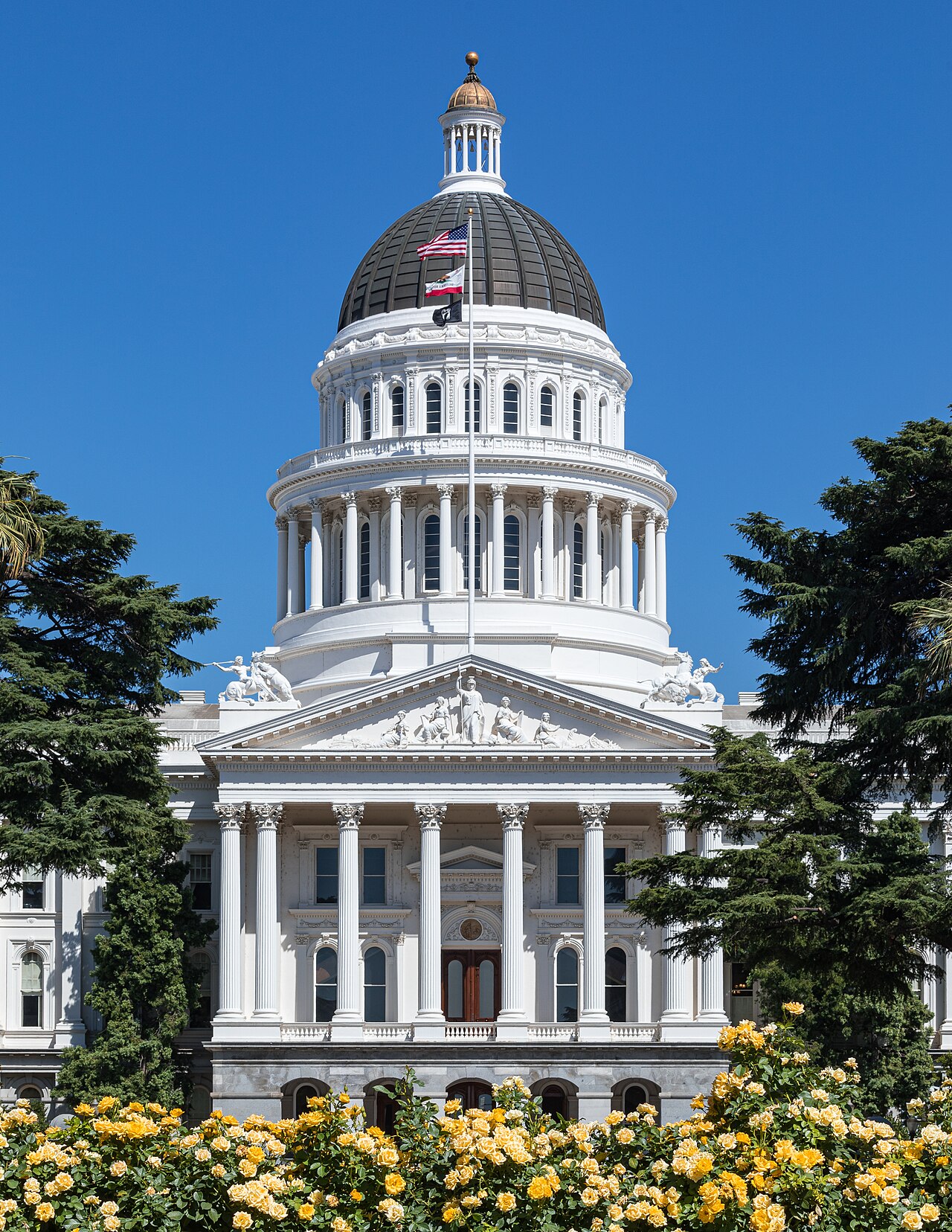
California State Capitol, Sacramento, June 2019. Photo: Frank Schulenburg, Creative Commons Attribution ShareAlike 4.0, via Wikimedia Commons.
California State Capitol, Sacramento, June 2019. Photo: Frank Schulenburg, Creative Commons Attribution ShareAlike 4.0, via Wikimedia Commons.
The bill drops the size threshold, drops the visible label option, and makes the hidden one say more. If Newsom signs it, it takes effect the same day.
Every AI image you make in California may soon carry a hidden label that says exactly what made it, when, and whether it was created from scratch or edited. The visible label you might have expected? That part is on its way out.
That’s the short version of SB 1000, a rewrite of the California AI Transparency Act by Senator Josh Becker. It cleared the Legislature at the end of August, was presented to Governor Gavin Newsom on September 2, 2026, and as of today, September 16, the official bill status still shows it waiting on his desk. He has until September 30 to act, according to a September 14 session wrap by the law firm Kelley Drye.
And because it’s written as an urgency statute, if he signs it, it takes effect the same day.
California already has an AI image labeling law on the books. According to the Legislative Counsel’s digest of SB 1000, the existing California AI Transparency Act took effect August 2, 2026. As it stands, it applies to a “covered provider,” meaning a company that makes a generative AI system with over 1,000,000 monthly visitors or users that’s publicly accessible in California. Those companies have to:
Four changes matter most for anyone making or sharing AI images.
1. The size threshold disappears. The bill deletes the 1,000,000 user threshold. A covered provider becomes any person that creates, codes or otherwise produces a generative AI system that is publicly accessible in California. The small image app with a few thousand users would be in the same bucket as the giants.
2. The visible label option goes away. The digest says the bill would delete the requirement that a covered provider offer users the option to include a manifest disclosure. The Legislature’s findings in the bill explain the thinking: “Conveying conflicting manifest and latent provenance information to consumers is detrimental to trust in both the provenance of content and the authenticity of any person, entity, or institution conveyed in that content.” Put simply, a visible tag that says one thing and hidden data that says another is worse than no tag.
3. The hidden label gets more specific. To the extent it’s technically feasible, the embedded disclosure in any image, video or audio a covered system creates or alters (other than by minor modification) has to convey, directly or through a link to a permanent webpage:
That disclosure also has to be “permanent or extraordinarily difficult to remove or tamper with” and compliant or interoperable with widely recognized industry standards.
4. The detection tool gets renamed and sharpened. The “AI detection tool” becomes a “disclosure verification tool.” It has to be free and publicly accessible, let you upload a file or paste a URL, show any provenance data it finds, and offer an API so it can be used without visiting the provider’s site. A provider can meet this by pointing users to a compliant third party tool instead.
SB 1000 isn’t the only provenance bill waiting on Newsom, either. Kelley Drye reports AB 2713, which would require large online platforms to show users whether content was generated or substantially altered by generative AI and let them download the provenance data, is also pending with the same September 30 deadline.
The duties walked through above fall on covered providers, the companies that build and offer the generators, not on the person typing the prompt. But you’ll feel them.
This isn’t legal advice, and the bill could still be vetoed. But the direction is clear. The label that matters is moving from the corner of the picture into the file itself, and after September 30 we’ll know whether California is making that the rule.
California Legislative Information, SB 1000 enrolled text and Legislative Counsel’s digest; SB 1000 bill status, checked September 16, 2026; Kelley Drye, Ad Law Access, September 14, 2026; CalMatters Digital Democracy, SB 1000. Photo: California State Capitol, June 2019, Frank Schulenburg, Creative Commons Attribution ShareAlike 4.0, via Wikimedia Commons.
